
During the Independent Monitoring Team’s (IMT) 13th reporting period (IMR-13) for the consent decree, the Chicago Police Department continued its efforts to build stronger partnerships in the community and expand support for marginalized communities throughout the city. CPD also expanded efforts to strengthen supervision and accountability internally. The IMR-13 report was released today and covers the timeframe from July 1, 2025 through December 31, 2025.
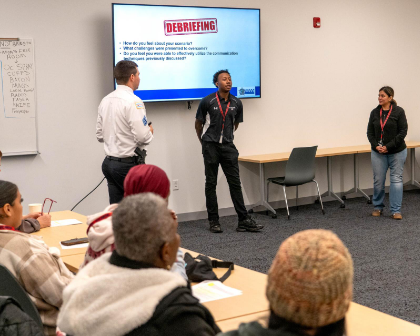
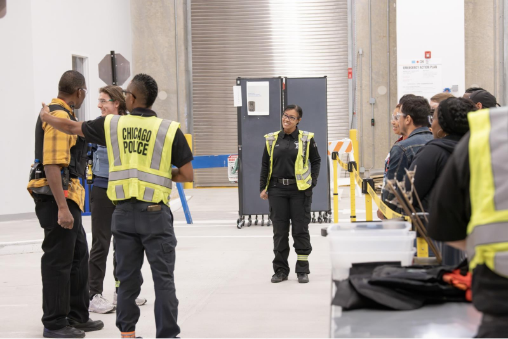
This monitoring period saw the continuation of CPD’s Community Training Observation Days (CTODs), which give community members a first-hand look at the mandatory training officers receive. During these CTODs, more than 90 community members underwent classroom and scenario-based training in areas including crisis intervention, de-escalation, use of force and constitutional policing.
CPD also published new policies in IMR-13 that include Interactions with Persons with Disabilities and Interactions with Persons Who Are Deaf, DeafBlind, or Hard of Hearing. These policies were developed with extensive community engagement that included individuals with lived experiences who helped inform the policies.
The Department’s Unity of Command and Span of Control Pilot program expanded during this monitoring period as well. This pilot program serves as a model to create stronger relationships in the community between officers and residents through a staffing model that promotes greater beat integrity, while also enhancing supervision at the district level through consistent schedules and supervisory assignments. This expansion brought the program to five more districts, with eight districts now piloting the staffing model.
Through IMR-13, CPD achieved some level of compliance* in 95% of monitorable consent decree paragraphs. Operational compliance rose to 25% and secondary compliance rose to 67% during this monitoring period.
*Preliminary compliance refers to whether a compliant policy has been created, secondary compliance refers to whether personnel have been adequately trained on the policy and operational compliance refers to when the reform has been successfully implemented into day-to-day operations.
Read the full IMR-13 report below: